Archives

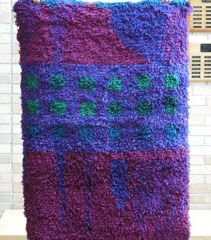
Houses and Chickens by Lila Nelson

Vesterheim Norwegian-American Museum: Building the Collection

By Laurann Gilbertson, Curator, Vesterheim Norwegian American Museum

Now numbering 24,000 objects, the collection that makes up Vesterheim Norwegian-American Museum in Decorah, Iowa, started in 1877 as a study aid for students attending Luther College.  The first donation was a group of birds’ eggs.  In the early years, the college’s collection was an assortment of natural history specimens, ethnographic items brought back by Lutheran missionaries serving around the world, relics of historical events, mementoes of important people, and reproductions of classical artworks.

By 1895 faculty and alumni at Luther College officially resolved that Norwegian immigrant materials should be a stated focus of the collection.  In doing so the museum became a pioneer in the preservation and promotion of America’s cultural diversity.

The first historic building was added to the grounds in 1913, starting the Open Air Division.  No other U.S. museum had collected buildings, though this was already taking place in Scandinavia.

In 1925, in honor of 100 years of emigration, Anders Sandvig (founder of Maihaugen, a major museum in eastern Norway) coordinated a gift of artifacts from Norwegian museums.  “May these objects work,” wrote Sandvig, “so that the Norwegian-ness in you will not die too soon, and the connection with the homeland will because of this be tighter.  Receive this gift as proof that we follow you all in our hearts, even though the big Atlantic parts us.”  The gift took two years to assemble and filled 23 crates.  The museum in Nordmøre sent several clothing items, including two linen shirts with extremely fine whitework embroidery.  They would have no way of knowing that this gift meant the survival of several cultural treasures when their museum would be destroyed during WWII.

lc0697

Shirt with whitework embroidery from Valset, Nordmøre, ca. 1830. Donated by Kristiansund Museum (now Nordmøre Museum) as part of a group of gifts from Norwegian museums. LC0697.

After the war, director Inga Bredesen Norstog created a national audience through newspapers and magazines and soon the museum was receiving visitors and artifact donations from all over the United States.

The museum became an independent institution in 1964 and adopted the name “Vesterheim,” which was the term that immigrants used to describe America – their western home – when writing letters home to Norway.

Beginning in the 1960s, director Marion Nelson showed visitors there was art in everyday objects and added fine art to the museum’s collection statement.  Today, staff are “refining” the collection – looking to fill gaps to ensure that the objects can tell even more stories of the immigrant experiences.  We are also trying to share many of these stories and artifacts through exhibits at the museum, online, and on the road.  A selection of 119 textiles can be viewed at  http://collections.vesterheim.org/items/browse?collection=3  The “Online Textiles Collection” includes woven, knit, embroidered, quilted, and sewn items.  Click on the listing of an item to read more about it.  Then click on the photo to see a large full-view and detailed images.

lc0298-3

Sjønaleister socks from Hardanger, Norway. This pair is one of 119 textile artifacts on Vesterheim’s Online Collections. LC0298.

In 1967, Vesterheim began an education program to teach traditional handwork skills by bringing instructors from Norway.  The first three instructors taught rosemaling (rose painting).    Since then, Norwegian instructors have taught all kinds of fiber arts, woodworking, and knifemaking, as well as music and dance.  Recent fiber arts teachers have included Marta Kløve Juuhl (warp-weighted loom weaving), Ingebjørg Monsen (pile weave, bunad jacket sewing), Liv Bugge (Norwegian overshot weaves), and Britt Solheim (sheepskin coverlet making).  American and Canadian instructors also teach one- to five-day classes at Vesterheim.  A highlight for many students is the visit to see artifacts in textile storage for information and inspiration.

Three textile symposia have been held at Vesterheim (1997, 2005, 2009).  These have offered opportunities to learn about Norwegian and Norwegian-American textiles, artists, and techniques from both the historical and contemporary perspectives.  Speakers and teachers have been brought from Norway for the symposia.

Another special educational opportunity comes in the form of textile study tours to Norway.  Katherine Larson for Nordic Heritage Museum organized the first trip in 1999 and then Vesterheim has offered six more trips (with the next trip planned for 2015).  The tours combine touring with hands-on learning.  There are visits to museums, presentations by curators, tours of factories, and visits to artists in their studios.  The philosophy behind the study tours is to travel with people who share a passion for textiles, do things that an independent traveler could not do, and learn a lot!  The tours have been popular with people who have seen Norway in a general way before and now want to focus in on textiles.  But many first-time travelers have found the tours to be a great introduction to Norway.  The tours usually attract a mix of people: weavers, knitters, embroiderers, collectors, textile enthusiasts, friends, and spouses.

IMG_0129

Margaret Trussell (Maryland) photographs halvfloss (“half” pile) cushion covers and Kay Larson (Washington) views the back of a billedvev (tapestry) cushion cover at Maihaugen in Lillehammer, Norway. The textiles were brought out specially for the Textile Study Tour to Norway and Sweden in 2007.

No history of Vesterheim is complete without a mention of Lila Nelson, who served as Registrar and Curator of Textiles for 27 years.  Lila has had such a significant influence on textile education, collections, research, and outreach at Vesterheim and in the United States that she has received special commendation from the Norwegian government.  The April 2012 issue of the Norwegian Textile Letter is dedicated to Lila Nelson and features some of her weavings.  When Lila retired in 1991 and I began working with the textile collection, many staffers said I had large shoes to fill.  That has been true, but gratefully Lila leaves a clear path of excellence to follow.

2011032046

“Houses and Chickens” by Lila Nelson. In this small hanging, Lila explored the creative possibilities of dansk brogd, a technique used in southern Norway for coverlets. Lila taught many classes in traditional weaving techniques at Vesterheim. 2011.032.046.

In part two of this article, which will appear in the May, 2014 issue of the Norwegian Textile Letter, take an “armchair” tour of Vesterheim’s textile collection.

Laurann Gilbertson has been Textile Curator at Vesterheim Norwegian-American Museum for 19 years and is now Chief Curator.

lgilbertson (at) vesterheim.org, 563-382-9681

Editor’s note: February 2014

Robbie LaFleur

Chance encounters and email conversations are great ways to find articles.  This summer I took a class in weaving on a warp-weighted loom; that’s where I met Heidi Goldberg, who said she would be happy to write an article about teaching a college class in Nordic Arts.  (My favorite line from her article was, “There are many students who have never worked on projects requiring facile hand skills unless it involved a computer keyboard.”)

Heidi Goldberg and Charlie Hovde

Heidi Goldberg and Charlie Hovde share a loom at Vesterheim, Summer 2013

A fortuitous chance encounter led to another great article in this issue, A Piece of Old Finery: The Story of the Nordland Bunad.  Kay Larson learned the story during a trip to a museum in northern Norway.  I was not expecting Laurann Gilbertson’s article about the history of the Vesterheim Norwegian-American Museum to bring tears to my eyes.  The same thing might happen to you when you read about the items sent from the museum in Nordmøre.  We’re lucky to have Ingebjørg Monsen’s loving tribute to Sissel Calmeyer.  (I’m also happy that Ingebjørg has two more artists she plans to profile in future issues.)  And finally, the snow-washing article is a bonus, yet another chance encounter story.  Enjoy them all!

A Most Important Note

This month’s header image of spelsau sheep in Norway was taken by Annemor Sundbø, and is used with her permission.

It is just a teaser, really, because it will appear in her forthcoming book about spelsau sheep in Norway.  Tusen takk, Annemor!  Norwegian Textile Letter readers – you will be sure to know about the book as soon as it is available!

Becoming the editor of the Norwegian Textile Letter has been a privilege and a very fun challenge.  I’ve been gratified by the willingness of talented writers to contribute, and I have enough ideas for years to come.  When adding Marta Kløve Juuhl’s reminiscence of snow-washing coverlets, it struck me that we can solicit more articles written in Norwegian, and include both Norwegian and English for our readers.

There is a constant learning curve for the technical aspects of editorship.  Based on my experience with two issues, I’ve been coming up with my own style guidelines and determining the best formats for article text and images to be submitted. I’ll continue to experiment with new ways to incorporate media.  In this issue, Heidi Goldberg submitted many photos of her students and their works.  I opted to include them all on a separate gallery page.   I see video contributions in the newsletter’s future.

And it’s not as if this is just one issue appearing on the site.  Scanned issues of volumes three and four have been added in the Archives section.  (But – one issue was not scanned correctly and will appear shortly –  the February 1998 issue.)

Readers are welcome to contact authors of the articles directly.  Each author’s email address is listed at the bottom of the article.  To avoid publicizing email addresses directly on the web, which might lead to unwanted spam, I substitute (at) instead of the @ sign.  For example, instead of listing author@gmail.com, I list author (at) gmail.com.

Robbie LaFleur

http://boundweave.wordpress.com/

Image 4

A Piece of Old Finery: The Story of the Nordland Bunad

By Katherine Larson

Photo1Sample

An early 20th century embroidery sample, adapted for the Nordland bunad from an older piece. Embroidery by Dina Kulstad. Vefsn Museum, Mosjøen, Norway. Photo: K. Larson.

Long ago, a woman took needle in hand and embroidered fanciful vines and flowers onto the breast-piece and pocket of a green wool dress.  When the dress met its inevitable fate in the ragbag, these small pieces were pulled off and saved.  At some point in their history, the right pair of hands gave these pieces to a little girl, who used them as “paintings” to decorate the walls of her playroom.  When the little girl left her childhood behind, she tucked the pieces away instead of throwing them away, a small happenstance that is at the beginning of the Nordland bunad’s story. (The bunad is a Norwegian costume based on local folk traditions; images of the Nordland bunad can be found here.)

During a visit to north Norway last September, I spent a day at Vefsn Museum in the town of Mosjøen.  Mosjøen lies in the middle of an area known as Helgeland, the southern part of Nordland County.  I was at the Museum to see the oldest known rye coverlet in Norway, a knotted-pile fragment now carefully preserved behind glass in a framed box.  Because my mother’s ancestors came from Helgeland, I was also curious about local textile traditions. Curator Rønnaug Tuven showed me the rye fragment, and then graciously asked if I would like to see some of the other treasures in the collection.  The invitation to look in a museum storeroom is an opportunity not to be missed, and I readily accepted. Since very little from the ‘old country’ survived my grandparent’s trek across the States to the West Coast, I was also excited to see what my family’s Helgeland attic might have contained.

Photo2OldEmbroidery

Old pieces of embroidery, probably a breast-piece and pocket. Vefsn Museum, Mosjøen, Norway. Photo: K. Larson

After looking in many boxes and opening many drawers, two small pieces of embroidered cloth came forth.  Tuven told me the story of the little girl and her “paintings,” and later showed me several books that explained how these pieces became the basis for the Nordland bunad. The following description summarizes this story,1 and provides an interesting window into a time when the Norwegian bunad was coming into being.

In the late 19th and early 20th centuries, interest in folk traditions was high, as Norwegians set about rediscovering their past.  Astrid Langjord, a writer and poet from the Mosjøen area, recounts that it was popular in the late 19th century to make copies of the Hardanger bunad. Then, following the 1903 publication of Hulda Garborg’s small booklet, Norsk Klædebunad (a description of Norwegian traditional dress, including several patterns), the Halling bunad became a new source of inspiration.

In 1926, the Hålogaland Ungdomslag (Helgeland Youth Society) decided to see if there were any pieces of old clothing in their region that might inspire a costume of their own.  Langjord was the leader of the committee charged with this task, and members of the committee searched for a year, each in their own area, to see what pieces of clothing might come to light.

At their next meeting in 1927, the Youth Society reviewed the many pieces of finery gathered by the committee, and there was general agreement that the most striking examples were the two small pieces of embroidery mentioned above.  They were brought to the meeting by Dina Kulstad, who had received them from a woman at Røyten farm in Vefsn, a keepsake from her childhood. (Vefsn is the larger municipality surrounding Mosjøen.)

It so happened that Langjord had an old green bodice in her collection, part of a bridal dress from Ravassåsen farm, also in Vefsn.  This bodice had a nice form but no embellishment, and the old embroidery was copied almost exactly onto the back of the bodice (you still find it there on today’s bunad). Discussion ensued concerning how to adapt the embroidery to the front of the garment, and of what the ultimate shape of the bodice would be.  The Oslo handcraft shop, Heimen, also took an interest in the project, and the final embroidery design for the skirt was contributed by one of its employees, a Miss Grude (Heimen, which is still a thriving business, helped to foster interest in the bunad, in association with Hulda Garborg).

Photo3BackEmbroidery

Embroidery on the back of the Nordland bunad. Vefsn Museum. Photo: Vefsn Museum.

A newly sewn blue version of the proposed bunad was proudly shown at the Youth Society’s meeting in the summer of 1928. The design was well received, and was adopted that fall into the needlework program of Vefsn Folk High School in Mosjøen.  Under the capable guidance of teacher Anne Svare, the first group of eleven students made bunads in both blue and green fabrics.

In describing the committee’s original search to find remnants of the local clothing tradition, Langjord remembered that many people had been very supportive of their efforts, but others had scoffed and suggested they should be doing something more useful. Speaking 20 years later, at a time when the bunad tradition had grown in stature, Langjord noted with some satisfaction that there were few who continued to express reservations about bondeglo when referring to the Nordland bunad.

Puzzled by the use of bondeglo, which is not in my Norwegian/English dictionary, I found the word in Hulda Garborg’s Norsk Klædebunad, along with an explanation for its somewhat derisive meaning (the booklet is online; see pp. 6–7).

In the late 19th century, according to Garborg, as factory-made clothing became popular, Norway’s time-honored, colorful forms of dress were abandoned for fabrics of “grey-brown” and “brown-grey-green”; in short, “color mush.”  A new word arose at that time, bondeglo, to describe traditional clothing.  In fear of this label, many rushed to divest themselves of their rural attire and don city clothes.  The picture of my own great grandmother, ca. 1880, might be a case in point.

Photo4Petersons

Peter Christian and Maren Kristin Peterson, ca. 1880, the author’s great grandparents. Vega, Norway. Photo: K. Larson.

Bonde is the Norwegian word for farmer, and it is likely that glo comes from glorete: gaudy or glaring,2 which explains Garborg’s further use of the term bondeglo. She notes that in some places, especially “high up in the mountains or long out towards the coast,” people perversely clung to their old ways. “…they wore their bondeglo as always, and considered themselves to be no more like ‘Indians’ than they had before.”  In addition to providing an interesting glimpse into turn-of-the-century sensibilities, Garborg’s reference makes clear that colorful rural attire was considered less-than-civilized in a country that was striving to emulate the fashions of a wider world.  No wonder Langjord and her committee members encountered crosscurrents when searching out pieces of discarded finery!

Fortunately, the committee persisted in the face of a somber, factory-informed sense of fashion.  Fortunately as well, a sentimental little girl kept her playroom “paintings,” to the benefit of future generations of Nordland women.

______________________________

[1] Sources for Nordland bunad description:

“Nordlandsbunaden, Vefsn-bunaden.” Excerpts from an informal lecture by Astrid Langjord, 1949. In Fagerli, Åse et al., eds. 1996. Spor etter mødrene. Kvinneprosjektet – Mon. Mosjøen, pp. 83–85.

Halse, Kristian 1999. Oplysning være skal vor lyst, Vefsn folkehøgskole 1899–1999. Mosjøen, pp. 186–191.

2 I would like to thank Ingebjørg Monsen, Leader of the Bergen Husflidslag, for help with this term.

Katherine (Kay) Larson is the author of The Woven Coverlets of Norway and holds a doctorate in Scandinavian Textile History from the University of Washington.

Published February 2014


Snow-washing

Snow-washing: An American Account and a Norwegian Story

Heidi Goldberg:  Snow washing ryas at Concordia College on Wednesday, January 29th, 2014

A cheerful visit from Solveig Storvick Pollei the week before served as the impetus for a rya snow-washing day. Solveig had stopped by the art department when she was at Concordia College to have a look at the weavings on campus. We found some ryas looking a bit drab and dusty, and her suggestion of a little snow cleaning spurred me into action.

Photos by Solveig Pollei.  The colors look bright here, but Solveig noted they were a bit dusty.

Photos by Solveig Pollei. The colors look bright here, but Solveig noted they were a bit dusty.

Rya from Concordia College

Solveig Pollei found a pair of ryas in storage at Concordia College

When we snow-washed the ryas, it was ten degrees and sunny. With only a light and variable wind, it seemed like a respite from the subzero temperatures and dangerous wind chills we’d endured in the last weeks.

At first I contemplated taking them home to clean them, away from curious eyes in my secluded front yard. Then I thought, “Why not celebrate the unusual activity of snow-washing handwoven articles and use the occasion as a learning and laughing opportunity with my Nordic Arts students!” We were finishing up our woodcarving unit and embarking on rosemaling; the fiber unit was still a few weeks away. I encouraged students to bring boots to the next class period.  When I announced that we should clean up early to go wash the ryas, the students seemed half interested, not really knowing what to expect. When it came time to go, even the reluctant scrambled for their coats, the oddity of the prospect urging them to see what it was all about.

Sonw-washing, Cassie

Cassie adds snow to the rya

We plodded off the sidewalk into the clean snow on Olin Hill; the snow was a couple feet deep. We flattened the three ryas out in the snow and started in. We dragged them a bit across the snow, gently stepped on them, piled and brushed snow across them with our mittens, picked them up, shook them out, flipped them over and repeated the process several times. The process not only cleaned the rugs, but provided a fun bonding experience for the class. I should note that one of the ryas is lighter in weight and needs some repairs; we took care to be quite gentle with this rya.

Nick and Heidi snow-wash the rya

Nick and Heidi snow-wash the rya

One could clearly see that the pieces were indeed cleaner, the colors were more vibrant, and the wool smelled fresher.  A few fine crystals stuck to the pieces after the washing. When we brought them back in, a little snow melted on the surface, dampening them slightly, but the pieces felt dry after a couple hours of being left to air out in my office. The crystals of the sparkling dry fresh snow worked beautifully to bring the ryas back to life.

Snow-washing

The ryas were turned over in the snow

Melissa, AJ, and the snow-wahsed rya

Melissa and AJ display the renewed rya

Marta Kløve Juuhl:  Snow-washing in the Mountains of Norway

(Editor’s note:  Since textile snow-washing is often done in Norway, I asked Marta Kløve Juuhl, from the Østeroy Museum in Hordaland, if she had any Norwegian instructions or photos to add.  She reminded me she is from Vestland, where there isn’t always so much snow, and her museum is even closer to the coast.  She didn’t really have instructions, but thinking about snow-washing brought up a great memory.  Here is her story, followed by a translation.)

Ein sommar på 1990 talet gjekk heile familien min, mann, eg og 3 barn (8 og 11år)  på ein lang fjelltur opp til ei jakthytte som far min bygde på 1960- talet. Det var 5 timar å gå, og alle ungane måtte ha ryggsekk med sine eigne ting i.  Hytta er ganske primitiv, men der er rikeleg med sengklede. Det vil seia mange ullteppe, eller kvitlar på vossamål, min dialekt.

Veret var strålande, så vi hadde ein fin tur opp, men gjekk i mykje snø. Dagen etter var det like fint ver, og då bestemte eg at vi skulle vaska kvitlane (ullteppa). Der var mange snøfenner rundt hytta, så vi bar ut alle saman, minst 20 teppe, breidde dei utover oppå snøen. Ungane fekk hoppa og spretta så mykje dei ville på dei. Etterpå snudde vi dei, og ungane gjentok hoppinga. Like ved er der nokre store steinar som vi la ullteppa på etterpå, så dei fekk turka seg. Og reine vart dei.

Jegerar har aldri tid til slikt når dei er på jakt, så eg er sikker på at kvitlane har ikkje vore vaska slik fleire gonger.

One summer in 1990 I took my whole family – my husband, me, and three children (our 11-year-old daughter and eight-year-old twin boys) – on a long mountain hike up to a hunting cabin my father built in the 1960s.  It was a five hour hike and all the children had to carry backpacks with their own belongings.  The cabin was very primitive but rich in bed coverings, that is to say, wool blankets, or “kvitlar” in Voss dialect.

The weather was brilliant so we had a fine hike up, but we walked in deep snow.  The day after had equally beautiful weather and we decided to wash the kvitlane in the many snowdrifts around the cabin. We carried them all out, at least 20 blankets, and laid them out over the snow.  The children got to jump and leap around on them as much as they wanted.  Afterwards we turned them over and the children resumed their hopping. There were several large rocks nearby, so we laid the rugs on them to dry. And clean they became.

Hunters never have time for this sort of task when they are hunting, so I’m quite sure that the kvitlane haven’t seen such washing many times!

Marta Kløve Juuhl taught weaving in the Norwegian Husflidsskole system for many years.  She now works part-time at Østerøy museum, primarily with textiles, and also in her private studio. Her current commissions include bands for bunads and wall hangings for churches.
marta.klove.juuhl (at) gmail.com
Sharon Marquardt

Transforming Through Tradition: Teaching Nordic Arts at Concordia College, Moorhead

By Heidi Goldberg 

My mother taught me how to knit when I was 11. I think that is where my love of fibers was born.  I immediately was rewarded with the sense of satisfaction in watching something form from my own mind and hands, not unlike drawing, which I have always loved. Bringing something from creative vision to artistic reality became my passion.  My dream of teaching in the creative field of art guided me to Concordia College in Moorhead, MN where for these last  eighteen years I have been teaching various art media to inspiring students.  Every day, I have the rich reward of witnessing students as they bask in the glow one gets after the rush of discovering when concept and technique unite and the fruits of labor are held in one’s hands.  Even as I teach, I too, still learn and rediscover the thrills of achieving success with new techniques. Well over a decade ago, I began working with Dawn Tommerdahl, my close friend and colleague who formerly taught in the Scandinavian Studies department at Concordia College, to envision a class in which our liberal arts students would be exposed to traditional Nordic arts. The influence, assistance, encouragement and camaraderie of Dawn and another dear friend, Charlie Hovde, have been critical in the process, nudging the development of the class along. The three of us have enjoyed numerous road trips to the mid-western Norsk mecca of Decorah, IA to take classes together at Vesterheim over the years. All of these experiences evolved into the creation of my class, Nordic Arts, which was given formal approval in the curriculum just this last year as a direct response for the call on campus for interdisciplinary connections and involvement in global issues. The global aspect of this course is at the heart of it. We examine questions such as:

  1. How are northern cultures and artists around the world connected through art and the making of unique objects?
  2.  How does our geography and climate affect who we are and how we live in relationship to the objects we make and live with?

Examining objects from Nordic cultures give us insights into ourselves and how we are connected to others through common experiences. sm.print Nordic Arts#43209ANordic Arts is an introduction to the technical and aesthetic depth, beauty, variety and uses of works in various media from Nordic countries. Students learn about influences of: history, fundamental connection to nature and geography, aesthetic, style, and function as well as technical processes of traditional arts of woodcarving, rosemaling, and fiber. There is no other course like this one offered at Concordia College. It is studio based but unlike any other studio classes in its subject matter and technical focus. The course supports and extends experiences of students in other courses of Art, Scandinavian Studies, and History through the practice of observing, making, and critiquing works of art.  It also works as a conduit in the study of culture and language as the material we cover brings is to use new terminology and study background reflecting technique, object, and culture. Nordic Arts students also learn from the historical investigations and presentations of Scandinavian Studies/History: Scandinavian Immigration and Settlement in America students. Working through the projects of this course increases self-confidence in students in the ability to design and make useful and beautiful objects with their own hands. Some of these objects are functional and practical objects; some are art objects that are more decorative in nature. We examine the meanings and blurred lines in the questions surrounding these ideas:

  1. What constitutes various levels of craft vs. art in a culture where the meaning of the word ‘craft’ is often diminished to a ‘YouTube do-it-yourself’ demonstration showing how to quickly throw together components resulting in a formula project?
  2. Why is the word craft so often used in a disparaging way in the world of fine art?
  3. What happened to the ‘craftmanship’ in craft?
  4. What is behind all the artificial hierarchy of media in the art world?

As an artist trained in printmaking, I greatly value and am a lover of process/technique through often time-consuming processes, it is important to me that students gain appreciation of process through witnessing and experiencing it, as well as a sense of satisfaction in getting through it with good results demonstrating a developing technique. The combination of discipline and skills students learn in this class reaches across fields and cultures, and are life-long skills that are supportive of, and requiring, creative thought processes and mind-body connection through critical thinking and fine motor skills as well as eye-hand coordination. These are skills, often discovered through earlier exposure to making things, that can be honed over decades of practice.  There are many students who have never worked on projects requiring facile hand skills unless it involved a computer keyboard. Studio art classes can be foreign and intimidating to some. In these classes, students overcome insecurities about designing and making objects step by step.  Through required dedication of time and effort they attain foundational skills and new abilities in techniques that are varied, challenging and exciting. This understanding of technique naturally leads to the creative exploration of concept and more advanced methods.

Cheryl Lussky and her projects

Cheryl Lussky stands with her projects at the end of the semester, sporting the traditional Norwegian fisherman’s cap she knitted

Materials inform and create dialog about how we choose to live. The issue of sustainability arises in this context because virtually all of the materials we use for the class come from nature, encouraging an affinity to nature. This ethical consideration is very much on the minds of many students who are conscious about the future of the earth and how our decisions impact it.  We consider notions of lifestyle choices, such as living more simply with less, and how those choices impact/affect others.  We consider as a class, choosing fewer, more special, objects that are in harmony with the environment, both in the place of residence and the out in the greater eco-environment, rather than multitudes of mass-produced/standardized things to fill the insatiable desires in which our mass consumerist society is so entrenched. Within the fiber unit, students quickly learn a multitude of skills such as how to spin wool, knit, draft patterns and knit two-color pieces with double pointed needles, felt, and weave. In terms of weaving techniques we have explored band weaving using cards, the rigid heddle loom, and the inkle loom, working with various weaves on table looms (including sampling plain weave, twill, as well as more culture specific weave structure including tavlebragd, krogbragd, and telemarksvev). We’ve had the honor of having dedicated expert weavers Marian Quanbeck Dahlberg and Sharon Marquardt work with us as well. Marian introduced us to working with linen, often used in Scandinavian textiles, instructing students in making lovely shimmering small towels in a waffle-weave variation, and Sharon worked with students on back-strap looms designed by Sharon using PVC pipe on which students were able to weave various Norwegian techniques one would make using a warp-weighted loom. Students were able to leave the course with these little portable looms in hand. I am so grateful for the generosity and wisdom these women have shared with my students and myself.

Sharon Marquardt

Sharon Marquardt assists Amber Huse with her weaving

The techniques we practice and the objects we make are deeply connected to past cultures and the work of our ancestors and heritages. We are learning from, and gaining respect for, the developed wisdom that is passed down generations. Students are able to understand the cultural and historical contexts that gave rise to the development of the work, and explain the nature of the work. Given this new and deeper insight, students with Nordic heritage are encouraged to re-connect to the histories of their families and launch new traditions and practices for investment into their future. Those who come to the class without Nordic heritage discover the beauty of Nordic culture and its unique relationship to nature and aesthetics. Amidst all this, students discover complexity and experience frustrations while overcoming the technical demands of making this work.  Inherent in this student experience comes the replenishing and development of identity, self and spirit in discovering their creative capabilities. Students add dimension to their identities through this learning and practice, putting in place a vehicle to develop balance and well-being personally and spiritually. I thank my mother for opening the door to a world into which I had no idea I was stepping.  It has become my calling to pass on to others, mainly the young women and men in my classes who are looking for islands of calm and wonder in our culture of high-speed instant gratification and time-demanding technology based communication.

Bonus!  See a slide show of photos from the Nordic Arts class, including photos of guest lecturers and students’ accomplishments.
Heidi Goldberg is a professor at Concordia College in Moorhead, Minnesota.
goldberg (at) cord.edu


Editor’s Letter: The New Digital Format

Even though the shiny new digital Norwegian Textile Letter (NTL) now includes numerous color photos and is easily available to a potentially huge audience, the lack of a print edition is still a bit of a loss.  So to those of you who enjoy print magazines and newsletters (and I am one!), I hope the benefits of the new format will win you over.

With each new issue of the NTL, a few more older issues will appear on the Archives page.  Maybe you are one of the NTL readers who has subscribed since 1994 – there are many!  If so, your comments and memories and updates would be great to hear.  For those of you who are new to the newsletter, it should be like Christmas every quarter – with many new issues to read. The first two volumes are available now.

There are a few ways I hope you respond to this new issue.  Read it and enjoy (and comment!). Subscribe.  Let others know about the newsletter. Volunteer to write an article for an upcoming issue, or just as important, suggest what you would like to read or know about.

Happy holidays to everyone.

Robbie LaFleur

http://boundweave.wordpress.com/

Image 4


From the Norwegian Breakfast Club to the Norwegian Textile Guild – a Brief History

By Mary Skoy

The Norwegian Textile Guild and the Norwegian Textile Letter had their roots in a meeting held in 1994.  Lila Nelson, curator emeritus at Vesterheim Norwegian American Museum, reminisced in the August, 2008 issue of the Norwegian Textile Letter,

I can still recall my amazement and disbelief. It was seven o’clock in the morning in the middle of Convergence 1994 in Minneapolis, Minnesota, and about seventy people were hopeful of getting into the room for forty-five that I had reserved. I was sure that even forty was an optimistic guess; who makes a seven a.m. date on a day already packed from morning to night? I envisioned a very few sleepy people sipping coffee and stifling yawns.

Never had I been more in error. By the end of the meeting, we had an organized named group, ideas galore for goals, suggestions for possible futures meetings, and a commitment from Textile Curator at Vesterheim, Laurann Gilbertson, to provide assistance and direction.

But, possibly most important of all, during the spiritied discussion, Betty and Don Johannesen, modestly and without fanfare, offered to edit a newsletter to keep us connected.

I realize in retrospect that without the newsletter, we would probably not have survived.  It was the one element in which we could all share  Scattered over the entire United States (and eventually including members from other countries), we were united mainly by the printed word.  We continued to meet at Convergence and also at some regional conferences, but many members could not attend these nation-wide gatherings.

Betty and Don Johannesen edited and published the high-quality newsletter for fourteen years. During Mary Skoy’s tenure as editor, from 2008 to 2013, members received even more for their low dues, with the inclusion of full-color photos.

The first year of newsletters set the academic, informational, and collegial tone of the newsletter.

  • Number 1, November 1994. Karen Diadick Casselman, “Historical and Modern Lichen Dyes: Some Ethical Considerations.”
  • Number 2, January 1995. Lila Nelson, “The Ruteåklær Tradition in Norway.”
  • Number 3, June 1995.  Amy Lightfoot, “Primitive Norwegian Sheep” and “Fisherman’s Mittens.”
  • Number 4, September 1995.  Betty Johannesen, “An Introduction to the Dansk Bragd Tradition” and “Dansk Brogd Rug.”

Norwegian Textile Guild milestones include:

  • Summer 1994 — A group of people interested in Norwegian weaving met at the Convergence conference in Minneapolis, taking the name “Norwegian Breakfast Club” in honor of its first 7 am meeting.
  • Fall 1994 — The first issue of the Norwegian Breakfast Club Newsletter was published by editors  Betty and Don Johannesen.
  • Summer 1995 — Members met at the Frontiers of Fibre conference in British Columbia. The name Norwegian Textile Letter was formally adopted.
  • 1995 — The first study group was organized (topic: dansk brogd or boundweave with pickup).
  • Fall 1997 — The first translation of a Norwegian publication was in included, translated by Eva Hovde Douhit.
  • Summer 1999 — The first Vesterheim Textile Study Tour travels to northern Norway.
  • Fall 2008 — Mary Skoy becomes editor of the Norwegian Textile Letter.
  • Fall 2013 — Robbie LaFleur becomes the editor of the new digital version of the Norwegian Textile Letter

Mary Lønning Skoy traces her interest in Norwegian textiles back to her great aunt, Sunniva Lønning, a teacher, fiber artist, and fiber activist in Norway in the mid 20th Century. Today, she weaves to  surround herself with handwoven textiles.

maryskoy (at) hotmail.com

A Studio Visit: Grete Bodøgaard

By Robbie LaFleur

Creative energy flows through Grete Bodøgaard and into her tapestries, her teaching, and her life.

It flows from the farm fields and towns of South Dakota, as she travels to teach weaving to children, correctional facility inmates, and others through the South Dakota Humanities Commission.

It flows from her home and studio in the former bank and library of Volin, South Dakota, a tiny town tucked in the farm fields of southeastern South Dakota.

It flows from her childhood home above the Arctic Circle in Bodø, Norway, a mere 4,033 miles away.

It flows from her looms.

One of Grete’s first comments during my interview visit to her studio was unsurprising. “I have restless feet,” she said, commenting on the fact that she is rarely at home, especially in the summer.  Her car was packed for travel to Moon Rain, north of Ottowa, Canada, to lead a two-day workshop on natural plant dyeing.

Grete lives and works in a converted bank in Volin, South Dakota. At every turn you see an artifact or art work, or a wall of visitors’ signatures, a myriad of cookbooks, or antique furniture and textiles from Norway.

IMG_1093

(Photo: Robbie LaFleur)

Oh, and weaving!  This tapestry was woven from a poem by her (second) husband, the filmmaker and poet Charles Nauman, who wrote it when they were living on a buffalo ranch in the Black Hills.  They hiked the prairie often and found a ring of teepee stones in which the opening faced east. Grete reminisced,  “For one year, 1999, while we lived on the ranch, Chuck wrote a poem each day and I wove a small tapestry each day. It was a very creative and productive year.”

IMG_1145

Tapestry sitting on a chair from Norway (Photo: Robbie LaFleur)

A more recent tapestry also touches on a South Dakota story. In this photo taken at a Sioux Falls gallery, the story of “Her Nest (A very small bird / has made her home / in a buffalo skull / a very small bird) is woven with digital symbols.”

IMG_5690

(Photo: Robbie LaFleur)

The corner location of this tapestry, appropriately in their bedroom, precluded a better photo.

IMG_1144

(Photo: Robbie LaFleur)

The bank building also used to house the town library in a long, narrow room along the front.  It is now Grete’s studio, and the bookshelves hold yards of books and yarn.

IMG_1113

(Photo: Robbie LaFleur)

The shelves face a space packed tight with looms. Look up to the high ceilings and you see spinning wheels, hauled from Norway as airplane carry-ons by her parents, and a treasured wool “beach bag” that her grandmother made and lined with plastic.

IMG_1118

(Photo: Robbie LaFleur)

Bodøgaard’s path from Bodø to South Dakota included stops to study weaving in Norway and Denmark, and an apprenticeship in weaving and dyeing in London.  While studying historical archaeological textiles in Denmark, Grete traveled to Hamburg. She viewed Bronze Age textiles; that was planned.  She had a love-at-first-sight experience with a professor from South Dakota; that was unexpected.

When Sam Heikes showed up in Denmark six months later with a marriage proposal, she accepted his hand, and a life adventure.  She was a modern-day immigrant to the Midwest, following generations of Scandinavians.  Her mother-in-law and her husband’s grandmother still spoke Norwegian.

Grete moved to South Dakota along with her eight-harness Glimåkra loom. Her mother insisted she needed it so she wouldn’t forget what she was supposed to be doing.

Together with the wife of an art professor at the University of South Dakota, Grete developed and taught a class in textiles. When she became pregnant in 1970, an administrator informed her they “can’t have people who show,” and the class came to an end.  As a progressive Norwegian, Grete thought, “Where am I?”

She was happy to raise children and sheep, along with her weaving, in the next few years. Her first commission, appropriately enough, was from the North Central Wool Marketing Association.  Her tapestry weaving career was given a jump start when the Minneapolis Tribune published a photo essay about her work in their Picture supplement in 1976.  (You can read “A Weaver: From Norway to the Prairie; included with permission, best copy available.) As a result of the attention, her commissions increased and she took on apprentices from the U.S. and abroad.

IMG_1122Her work in tapestry over the years has been influenced by what she looks at and what she reads, and what she remembers. When immersed in a project, she can work eight to ten hours a day.  “I’m a fanatic.  I get so much energy from my work,” she said. One of her large commissions was a tapestry of a painting, “Indian Christ,” by the noted American Indian artist Oscar Howe.  It is seven feet by ten feet, six inches, and hangs above the altar in the chapel of Our Lady of the Sioux Chapel at St. Joseph’s Indian School in Chamberlain, South Dakota.

indian Christ: O.Howe

Newspaper photo supplied by the artist

Another news article shows the glorious scale of three commissioned weavings.

Dakota Seasons, 1980 G. Bodogaard, text 1At one point, South Dakota almost lost this talented weaver. “When Bush was elected, we moved back to Norway.” She and her second husband moved into the house where she grew up, in a group of buildings mostly constructed in the late 15th century for Danish government officials, and also including a church built in 1275.  The area was settled even earlier.  A spindle stone made of soapstone from Viking times was discovered under the house, and is now in Grete’s studio.  Their house looked out over a creek; the ocean was a five minute walk away.  What could trump this lovely situation?  Her daughter announced she was pregnant.

IMG_1120

Grete Bodogaard holds a drop spindle made with Viking era soapstone (Photo: Robbie LaFleur

Though Grete moved back to South Dakota, her trips to Norway are frequent and her ties to Norway are strong.  An upcoming exhibit in Bodø will include works from Grete and from another transplanted Norwegian artist working in Seattle, printmaker Eva Isaksen. The exhibit, “Light and Dark in the North,” is a result of the need for the two artists from Bodø to “go home,” both in their works and physically.

Details for weavers

Grete Bodøgaard weaves primarily on a two-meter wide Glimåkra tapestry loom. “It’s solid to work on,” Grete said.  She prefers an upright loom for tapestry because it is difficult to get perspective when looking down at a floor loom. A second old tapestry loom was found by chance.  Grete’s sister-in-law purchased a house owned by two tapestry weavers, who left their looms. She uses primarily Norwegian yarns, and stocks up each time she visits Norway. In the U.S. she buys through Norsk Fjord Fiber.

Grete studied with Maria Brekke Koppen for one year in Oslo.  Koppen was an exacting teacher, but one who encouraged personal exploration.  On the one hand you should follow directions, Koppen emphasized, but you have to figure out your own way of doing.  Generations of tapestry weavers have studied from her textbook, Norwegian Tapestry Weaving, and Grete’s studio copy is well-worn.  You’ll find many of the Norwegian joining techniques described in the book in Grete’s tapestries. She explained succinctly, “I don’t like to sew things up.”

Grete has been inspired by many Norwegian artists, including the contemporary artist and tapestry designer Jan Groth.  “There are so many wonderful weavers in Norway,” Grete said, “There are no rules.”

Of Synnove Anker Aurdal she noted, “It was a total enlightenment to hear her talk.  I loved her creativity. She was very elegant.” (Though there is not much online on Aurdal in English, see wonderful images at this Facebook site and the Absolute Tapestry site.)

The first time she saw a weaving by Frida Hansen was at a museum in Hamburg.  Although Hansen was a prominent European artist in the early part of the 20th century, at the time Grete was studying, Hansen wasn’t studied or accepted in her home country of Norway.

Grete was influenced early on by Hannah Ryggen’s tapestries, which she saw as a child.  Ryggen lived not far from Grete’s grandmother.  Ryggen never learned to draw, Grete commented, yet the power of her images was strong.

More background on Grete Bodøgaard:

Robbie LaFleur weaves in Minneapolis, Minnesota, and is the editor of the Norwegian Textile Letter.

lafleur1801 (at) me.com

National Exhibition of Folk Art in the Norwegian Tradition, 2013

By Laurann Gilbertson

Vesterheim Norwegian-American Museum’s National Exhibition of Folk Art in the Norwegian Tradition was on view in Decorah, Iowa, from June 11 to July 27, 2013.   The exhibition, which also includes woodworking, knifemaking, and rosemaling (decorative painting), attracted more than 3,400 visitors.

Weavers sent traditional and contemporary interpretations of Norwegian weaves.  Judges wrote constructive comments and awarded ribbons.  The judges were Marta Kløve Juuhl, a weaver from Arna, Norway, and Linda Elkins, former Instructor of Art at Luther College and a weaver from Decorah, Iowa.

Entries in the Traditional category followed the historical tradition in technique, colors, and materials.  Entries could also be adaptations of old weavings.  In this category, a Blue Ribbon went to Sandra Somdahl (Decorah, IA) for “Fall Morning” Wall Hanging in krokbragd technique.

"Fall Morning" by Sandra Somdahl (Photo: Charlie Langton)

“Fall Morning” by Sandra Somdahl (Photo: Vesterheim staff)

A Red Ribbon went to Donna Laken (Rockford, IL) for “Crooked Path Blues” Rug in krokbragd technique.

208 Laken sm

“Crooked Path Blues” by Donna Laken (Photo: Vesterheim staff)

A White Ribbon went to Betty Rikansrud Nelson (Decorah, IA) for Table Runner in doubleweave technique.

"Table Runner in Doubleweave Technique" by Betty Rikansrud Nelson.  (Photo: Charlie Langton)

“Table Runner in Doubleweave Technique” by Betty Rikansrud Nelson (Photo: Vesterheim staff)

Honorable Mentions were awarded to Sharon Marquardt (Henning, MN) for a West Coast-style wall hanging and to Keith Pierce (Lauderdale, MN) for a Sami-style band.

"West Coast Wall Hanging" by Sharon Marquardt.  (Photo: Charlie Langton)

“West Coast Wall Hanging” by Sharon Marquardt (Photo: Vesterheim staff)

"Sami Band" by Keith Pierce (Photo: Charlie Langton)

“Sami Band” by Keith Pierce (Photo: Vesterheim staff)

Entries in the Contemporary category showed a contemporary departure from the historical tradition in technique or colors or materials.  Some elements still identified the pieces as being within the Norwegian weaving tradition.  In this category, Blue Ribbons went to Jane Connett (Roseville, MN) for “Bookmarks in Krokbragd Technique” and to Patty Kuebker Johnson (Roberts, WI) for “Exploring Drawloom” wall hanging.

204 Connett sm

“Bookmarks in Krokbragd Technique” by Jane Connett. (Photo: Vesterheim staff)

"Exploring Drawloom" by Patty Keubker-Johnson (Photo: Charlie Langton)

“Exploring Drawloom” by Patty Kuebker-Johnson (Photo: Vesterheim staff)

Veronna Capone (Brookings, SD) received two Red Ribbon, for “Centerpiece in Monksbelt Technique” and “Centerpiece,” a runner in turned monksbelt technique.

"Centerpiece" by Veronna Capone (Photo : Charlie Langton)

“Centerpiece” by Veronna Capone (Photo : Vesterheim staff)

No White Ribbons were awarded.  Honorable Mentions went to Nancy Ellison (Zumbrota, MN) for “The Farmer’s Sheep” wall wanging in krokbragd and rya techniques and to Judy Ann Ness (Eugene, OR) for “Celestial Navigation: The Journey Home,”  a wall hanging in krokbragd technique.

"The Farmer's Sheep" by Nancy Ellison (Photo: Charlie Langton)

“The Farmer’s Sheep” by Nancy Ellison (Photo: Vesterheim staff)

"Celestial Navigation: The Journey Home" by Judy Ness. (Photo: Charlie Langton)

“Celestial Navigation: The Journey Home” by Judy Ness (Photo: Vesterheim staff)

The Best of Show weaving was Jane Connett’s “Bookmarks.”  Visitors to the exhibition voted for their favorite weaving to receive a People’s Choice award.  They chose Donna Laken’s “Crooked Path Blues” rug.

As weavers win ribbons they accumulate points toward a Gold Medal.  Blue Ribbon = 3 points, Red Ribbon = 2 points, White Ribbon = 1 point.  After a weaver accumulates 8 points, he/she is awarded a Gold Medal.  With their ribbons this year, Veronna Capone and Betty Rikansrud Nelson received Gold Medals in Weaving.

Consider sending a piece or two for next year’s exhibition.  The deadline for entries will be May 23, 2014.  You can find Official Rules and Guidelines online, or if you prefer that a copy of the rules be mailed to you, contact me by phone or email.

Laurann Gilbertson has been Textile Curator at Vesterheim Norwegian-American Museum for 19 years and is now Chief Curator.

lgilbertson (at) vesterheim.org, 563-382-9681

(Editor’s note:  Read more about Veronna Capone’s weaving and her gold medal here.)

Warp-Weighted Loom Classes at Vesterheim, July 2013

By Melba Granlund

The Warp-weighted Loom

Based on finds in ancient burial sites in the Palestine city of Jericho, it has been estimated that the warp-weighted loom dates back 9,000 years – or to the seventh millennium BC.  As such, it is the oldest type of loom and, remarkably, remains in use even today.   No one has ascertained the exact location where the warp-weighted loom was first developed, but evidence of its use is widespread across Europe, Asia Minor, and Scandinavia, as far north as the Arctic Circle.

LoomSketch copy

Sketch by Kay Larson

It’s my guess that the simplicity of the loom construction, and the ease with which it can be moved from place to place, are the reasons why it has survived so long.  The warp-weighted loom consists of two vertical uprights, a horizontal warp beam, a shed rod, a heddle rod and weights.  Warp threads are held parallel under tension by being tied in small bundles to weights made from either stone, round rings of fired clay, or metal.  In Norway, soapstone was often used.  A spacing cord is used to keep the threads in order, half of which are positioned through string heddles attached to the heddle rod, enabling the weaver to create two sheds for the weaving process.  More complex patterns and weave structures such as krokbragd, rosepath, boundweave, and twill are also possible with the use of additional heddles or by finger-picking additional sheds.

Because of my love for all things old, I have long wanted to try my hand at using one of these looms.   My opportunity came this summer at Vesterheim. Vesterheim staff invited Marta Kløve Juuhl to come from Norway and teach two warp-weighted loom classes, held during the two weeks prior to the annual Nordic Fest.  The first class wove a Sami grene (blanket) using handspun wool in natural colors.  In the second class, students chose between two weaving techniques – one, a western Norwegian åkle using traditional colors of ryegarn, and the other, a rya, “the Viking way.”   As it turned out, I was able to be a student in both classes.   In the second class I chose the western Norwegian åkle.

Marta taught classes twice before at Vesterheim.   Among other projects, Marta currently teaches warp-weighted loom weaving at the Østerøy Museum in Norway.  She describes her life as that which revolves around weaving, as that is all she does.   Her dedication to, and knowledge of, weaving was obvious from the start.   Marta’s easy-going and caring nature made the experience a joy for everyone.  She could trouble-shoot any problem and anticipated when you were going to have a problem even before it happened.   If you made an error, she showed you how to correct it and did so in a nurturing manner.   She is one of those teachers you will always remember with fondness and gratitude.

IMG_5116
Marta Kløve Juuhl winding a header (Photo: Robbie LaFleur)

Sami Grene

Instruction in the first class began by learning about the Sami tradition of grene weaving, which is still being practiced today by women in Finnmark, the northernmost region of Norway.   Those familiar with Sami band weaving and  Sami folk dress may think that all Sami clothing is adorned with brilliant colors of red, yellow, and blue.   Not so.  We learned the Sami people are currently wearing more clothing in natural colors, and not as many multi-colored garments as in the past.  This was also true of the grene, where only natural colored wool is used.  Marta’s sample grene piece was made from luxurious Norwegian sheep wool, handspun by a Sami woman from Finnmark. The wool was not from the Norwegian Spelsau sheep, but from a Norwegian ”white” sheep, which according to Marta is now more common in Norway.   Marta arranged for us to order this same lovely handspun wool, and she brought over 70 skeins for the class.  The grene incorporates three separate qualities or weights of wool – a different weight each for the header, the warp yarn and the weft yarn – each spun in a different technique, either for strength or loft.   The yarn is truly distinctive, and is not available at any Husflid in Norway (trust me, I know, because I tried to find it).  While some class members chose to bring their own handspun, we all used wool in the natural colors of the sheep:  white, grey, or natural black. One student even brought her own loom to the grene class, homemade following a picture she had seen in a children’s book.

grenes

A variety of natural sheep colors in the student pieces (Photo: Melba Granlund)

The Sami grene begins with a header or narrow band woven in a checkerboard pattern using a small heddle.  Extensions of the weft threads from the header are used for the warp threads.  The header band with lengthy warp threads is lashed onto the top warp beam, and then the warp threads are arranged to create two sheds using a series of string heddles and a finger-crocheted spacing chain to keep them in order.

Image 3

Sami grene header (Photo: Melba Granlund)

The header is lashed to the loom (Photo: Melba Granlund)

The header is lashed to the loom (Photo: Melba Granlund)

Typical Sami pattern designs were depicted for us in the sample piece Marta had woven for the class and in the references provided in the Østerøy Museum booklet, Oppstadveven.   In addition, we viewed a Sami grene on display in the Sami collection at the Vesterheim Museum.

Vesterheim-grene

Grene owned by Vesterheim (Photo: Vesterheim staff)

Weft yarn for the grene was made up into large butterflies called “udoos.”  As you can imagine, there were a lot of jokes flying about using, and abusing, that term.  As weaving progressed, the weft threads were eased into place by grasping and pulling apart the loose warp threads below,  snapping the weft threads upward into position.

Image 5

Western Norway Åklæ

We began the åkle with a twisted cord as the header, made from four strands of the same yarn to be used in the åkle (red, blue, green, gold).   The twisted cord is lashed to the top beam of the loom.  Warp threads are then inserted through the header at so many threads per centimeter, attached to weights, arranged in string heddles, and finally connected by a spacing chain to keep them in order, similar to that done for the grene.  Weft yarns were bundled up in “udoos” the same as for the grene, and as weaving progressed, rows of weft threads were beaten into position using a weaving sword made of wood or bone.  As an alternative, you could pull apart the warp threads to snap the weft yarn into place, as we did with the grene. At the edges, we used the western Norway technique of carrying the yarn at the selvedge rather than cutting the yarn with each color change. This creates a thicker edge, different from other weaving.

Students chose their own weaving patterns. My inspiration came from an åkle in the Vesterheim collection which is depicted in Kay Larsen’s book, The Woven Coverlets of Norway.  I decided to incorporate as many krokbragd patterns as I could find depicting crosses, as well as tapestry techniques including rutevev and Vestfoldmett. As an experimental color study, two other students decided to weave the same band patterns, but using different colors.

IMG_5139

Curator Laurann Gilbertson inspired students with coverlets from the Vesterheim collection.

Five students wove ryas. One rya weaver, who brought her own loom and planned to weave fabric to use in Viking reenactments, chose to weave a twill requiring four sheds.    She explained that twill fabric has been found dating back to the late Bronze Age in Denmark.

IMG_5211

For use as a Viking-era shawl, Elizabeth Christianson wove a rya with a twill base. (Photo: Melba Granlund)

Lessons Learned

Much to my surprise, while I thought I would not be able to tolerate standing all day at the loom, it came easy — I found it easier than sitting at a floor loom all day long.   Another thing that became apparent to me is that I spend a lot of time trying to make a decision about which patterns to choose, as there are so many beautiful ones from which to pick.

Probably the most important thing I discovered, however, was that when using a warp-weighted loom, be sure you have enough rocks!  It became obvious about halfway through my first project that my grene was doomed to fail due to the lack of enough rocks and the inconsistency in their sizes.  There weren’t enough rocks for everyone in the class, and the stones varied in weight widely. The inconsistent/inadequate warp string bundles caused my piece to draw in severely toward the center, as there was more weight there than on the outside warp threads.  I considered repositioning the heavy rocks to the outside, but decided that that might just have caused warp thread draw-in at a different area, or cause the piece to be tweaked or stretched to one side and make it more difficult to keep an even beat and straight lines.  So I left them as they were, which was probably a mistake.   I tried to compensate by leaving 3-4 inches of extra weft thread at each selvedge in each row, which was then needled into position towards the middle, trying to force the warp threads further apart.  While that helped, it was not sufficient to solve the problem completely.  Oh, well, it’s just a practice piece, I told myself.  Next time, I will devote more attention to this part of the set up.  Thankfully, I did not have this problem in the second class as more weights were found for all the looms, including weights in the form of water bottles.  In retrospect, I probably should have done something similar for my grene.

IMG_0974

Even, successful distribution of rocks in the second class (Photo: Melba Granlund)

At the end of these classes, many of us had fallen in love with this type of loom, and if we didn’t already have one, we wanted one and were looking for ways to acquire one, either by outright purchase or having one built.  I’m still working on that part, as my åkle isn’t done and needs to get back on a loom to be finished.  Even if my piece were done, I know that I will definitely be doing more weaving on this “way-back machine” called a warp-weighted loom.

REFERENCES

  • By og Bygd 1983, Norsk Folkemuseums Årbok:  Paper by Elsa E. Gudjonson, “Nogle Bemærkninger om den Islandske Wægtvev, vestadur.”
  • Hansen, Egon H.  Opstadvæv Før og Nu. København, Denmark: Teamcos forlag,  (1978)
  • Hoffman, Marta.  Fra Fiber til Tøy. Oslo, Norway: Landbruksforlaget A/S, 1991.
  • Hoffman, Marta.  The Warp-Weighted Loom. Robin and Russ Handweavers, 1964.
  • Kåstad, Anna Østerbø.  Oppstadveven. Østeroy Museum, 2000.
  • Sundt, Eilert.  Om Husfliden i Norge. Oslo, Norway:  Gyldendal, 1975.

By Melba Granlund

melba.granlund (at) gmail.com